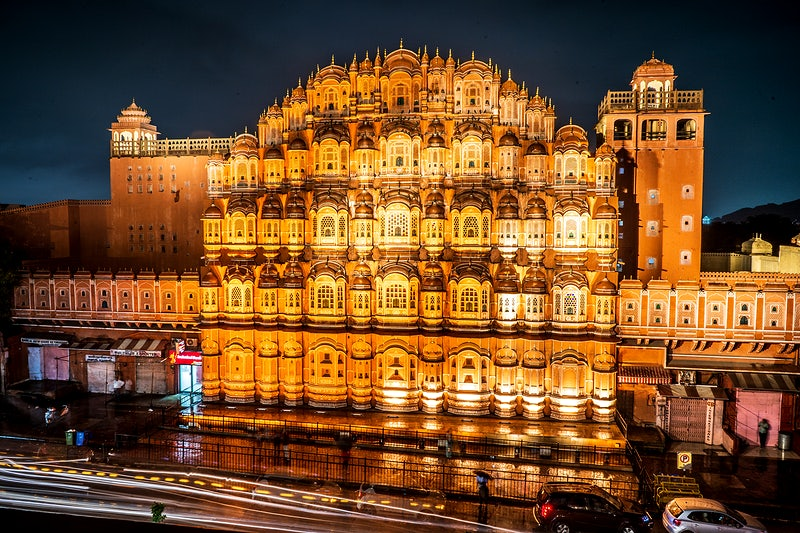
<p>Rajasthan is famous for its majestic forts, magnificent palaces, colourful markets and vast Thar Desert. But there is
another reason travellers fall in love with the state: its food. The famous food of Rajasthan reflects the region's
history, geography, traditions and remarkable ability to create deeply satisfying dishes from simple, locally
available ingredients.p>
<p>A traditional Rajasthani meal can be wonderfully rich, spicy, aromatic and comforting at the same time. From the
iconic combination of Dal Baati Churma to fiery Laal Maas, tangy Ker Sangri, crisp Pyaz Kachori and delicate Ghevar,
the cuisine offers an extraordinary range of flavours.p>
<p>What makes Rajasthani cuisine particularly interesting is that food traditions developed in an environment where
water and fresh green vegetables were not always readily available. Many traditional preparations therefore relied
on grains, pulses, gram flour, dairy products, spices, dried vegetables and ingredients that could be stored for
longer periods. Rajasthan Tourism also notes that the state's cuisine varies from one region to another, even though
certain dishes have become famous throughout the state.p>
<p>For a traveller, discovering Rajasthan through its food can be just as rewarding as visiting its forts and palaces. A
plate of Dal Baati Churma in Jaipur, a spicy Mirchi Bada in Jodhpur, a bowl of Gatte Ki Sabzi in Udaipur or a piece
of Ghevar during the monsoon can become one of the most memorable parts of the journey.p>
<h2>What Makes Rajasthani Food So Special?h2>
<p>Rajasthani cuisine has evolved around the state's climate, lifestyle and cultural history. Traditional cooking often
makes creative use of ingredients that are practical to store and prepare, including gram flour, lentils, wheat,
millet, dried berries, beans, spices and clarified butter.p>
<p>The result is a cuisine that is intensely flavoured without relying on an enormous variety of fresh ingredients.p>
<p>Spices play an important role, but Rajasthani food is not simply about heat. There is a fascinating balance between
spicy, tangy, earthy, sweet and creamy flavours.p>
<p>A single traditional meal can include a rich curry, a dry vegetable preparation, crisp bread, cooling curd, spicy
chutney and a sweet dish.p>
<p>The influence of Rajasthan's royal kitchens can also be seen in dishes such as Laal Maas and Safed Maas, while
everyday village and Marwari cooking has given the state beloved vegetarian dishes such as Ker Sangri, Gatte Ki
Sabzi and Panchmel Dal.p>
<p>Rajasthan Tourism describes the state's cuisine as an important reflection of its Rajputana culture and highlights
dishes including Dal Baati Churma, Laal Maas, Safed Maas, Soyeta and Lasun Ki Chutney among its renowned foods.p>
Dal Baati Churma
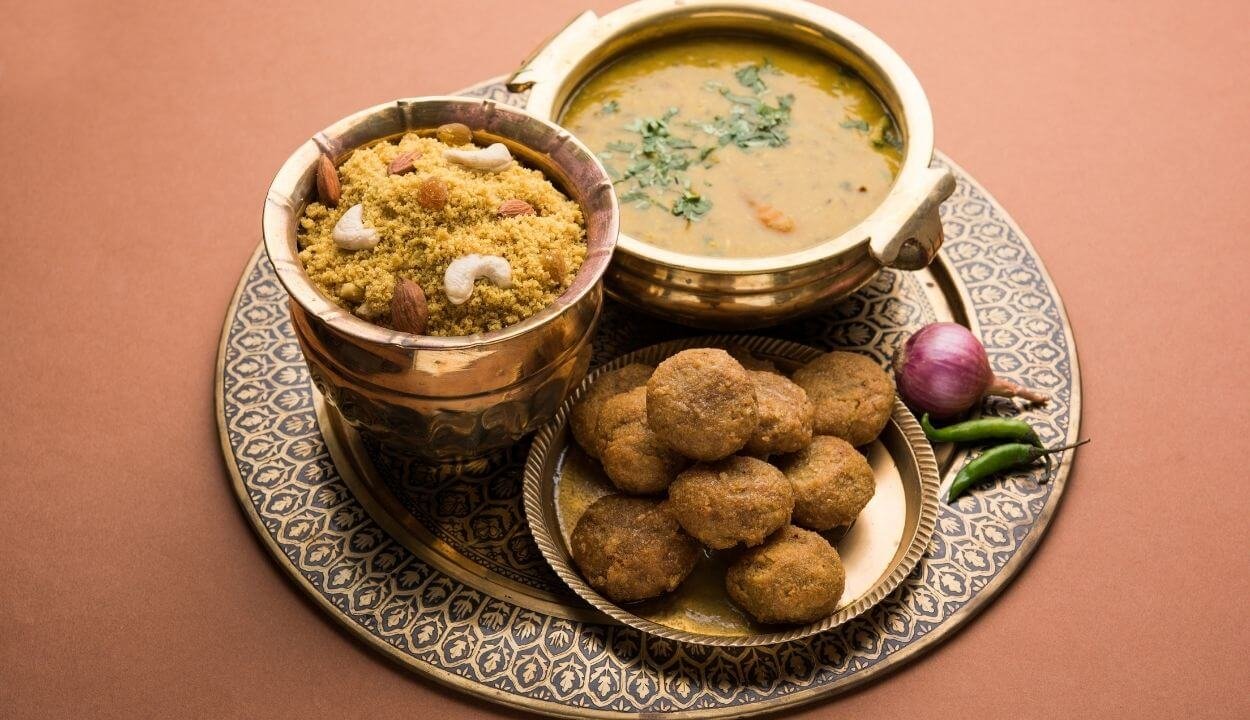
If there is one dish that represents Rajasthan's famous food, it is Dal Baati Churma.
This traditional combination brings together three distinct preparations: Dal, Baati and Churma.
Dal consists of lentils cooked with spices, while Baati is made from wheat dough shaped into round balls and traditionally baked until cooked. The Baati is then generously served with ghee. Churma provides the sweet element, made by crumbling cooked wheat preparation and combining it with ghee and sugar, often with nuts or other flavourful additions.
The contrast is what makes the meal so satisfying. The savoury, spiced dal complements the rich baati, while the sweet churma provides a completely different texture and flavour.
It is commonly accompanied by chutneys, including spicy garlic chutney, and chillies and other accompaniments.
Rajasthan Tourism describes Dal Baati Churma as one of the state's most cherished complete meals and notes the traditional practice of serving baati with generous amounts of ghee, dal and chutney.
For first-timers, this is a dish that should be near the top of the Rajasthan food list.
Laal Maas
Laal Maas is one of Rajasthan's most famous non-vegetarian dishes and has a strong association with the royal culinary traditions of the state.
The name literally refers to red meat, and the dish is known for its rich red colour and bold chilli-forward flavour. Traditionally prepared with mutton, Laal Maas combines meat with spices and a distinctive chilli-based gravy.
Despite its reputation for being fiery, a well-prepared Laal Maas is about much more than simply heat. The slow-cooked meat develops a rich depth of flavour, while garlic, spices and red chillies create its characteristic aroma and colour.
The dish is commonly enjoyed with roti or rice.
Rajasthan Tourism describes Laal Maas as a traditional dish associated with royal kitchens. It notes that the meat is traditionally marinated with curd before being cooked with spices.
If you enjoy Indian meat curries and are comfortable with spicy food, tasting Laal Maas in Rajasthan can be an essential culinary experience.
Safed Maas
While Laal Maas is famous for its fiery personality, Safed Maas offers a much more delicate alternative.
Safed Maas, or white meat, is a creamy lamb preparation traditionally made with ingredients such as onion, ginger, garlic, pepper and cardamom.
Its pale appearance comes from the creamy gravy rather than the deep red chilli base associated with Laal Maas. The result is a rich, aromatic curry with a softer flavour profile.
The dish is often associated with the royal culinary traditions of Rajasthan and is an excellent choice for travellers who want to explore the state's non-vegetarian cuisine without going directly for its hottest dishes.
Gatte Ki Sabzi
Gatte Ki Sabzi is one of the most recognisable vegetarian dishes in Rajasthani cuisine.
The word "gatte" refers to cylindrical pieces made primarily from gram flour, which are cooked and then simmered in a spiced gravy. Depending on the preparation, the gravy may be based on curd and spices, giving the dish a creamy, tangy and aromatic character.
The beauty of Gatte Ki Sabzi is its simplicity. Gram flour becomes the main ingredient in place of vegetables, making the dish particularly suited to Rajasthan's traditional cooking environment.
It is usually served with roti, paratha or rice and can form part of a larger Rajasthani thali.
For anyone exploring vegetarian food in Rajasthan, Gatte Ki Sabzi is one of the dishes worth seeking out.
Shahi Gatte
Shahi Gatte takes the familiar gram-flour dumpling and gives it a richer, more elaborate treatment.
Also known as Govind Gatte, the dish uses fried besan dumplings, often prepared with nuts, and serves them in a thick, flavourful gravy.
The gravy commonly incorporates curd and aromatic spices, creating a rich accompaniment for the dumplings. It is typically eaten with hot rotis or rice.
Rajasthan Tourism includes Shahi Gatte among the state's notable traditional dishes and describes the preparation as a richer variation of gatte made with gram flour, nuts and a thick curd-based gravy.
Ker Sangri
Ker Sangri is one of the dishes that best demonstrates how Rajasthan's traditional cooks adapted to the desert environment.
Ker is a small wild berry, while Sangri comes from the pods of the Khejri tree. Together, they create a distinctive preparation that is tangy, spicy and earthy.
Unlike many vegetable dishes found elsewhere in India, Ker Sangri relies on ingredients that thrive in Rajasthan's arid environment.
It is traditionally cooked with spices such as red chilli, cumin, carom seeds and other seasonings. The dish is generally prepared as a relatively dry vegetable and can be stored for longer periods.
Ker Sangri has a particularly strong place in Marwari cuisine and is commonly served during traditional celebrations and weddings.
Rajasthan Tourism describes Ker Sangri as one of the state's authentic desert-region preparations and notes its importance in Marwari wedding meals.
For visitors looking for a dish that genuinely reflects Rajasthan's landscape and culinary history, Ker Sangri is an excellent choice.
Gatte Ki Khichdi
Gatte Ki Khichdi, also known as Ram Paulo, offers another creative example of Rajasthani cooking.
Instead of relying solely on vegetables, the dish combines rice with gram-flour dumplings, spices and other ingredients. The gatte provides a distinctive texture to the rice, while the spices give the dish its characteristic Rajasthani flavour.
It is particularly associated with western Rajasthan and is often served with curd or chutney.
The dish is comforting and filling, making it a wonderful option for travellers who want something less elaborate than a full thali but still distinctly regional.
Panchmel Dal
Panchmel Dal is another important part of Rajasthan's vegetarian food tradition.
As its name suggests, the dish combines five types of lentils, creating a layered flavour and texture. The dal is cooked with spices and a tempering that gives it an aromatic finish.
It is often served as part of a traditional Rajasthani meal and pairs particularly well with Baati.
The combination of Panchmel Dal and Baati is a great way to experience the heart of Rajasthan's traditional vegetarian cuisine.
Mirchi Bada
If you enjoy spicy snacks, Mirchi Bada is a must-try when visiting Rajasthan.
The snack is particularly associated with Jodhpur and has become one of the city's most recognisable street foods.
Large green chillies are stuffed with a spiced potato filling, coated in gram flour batter and deep-fried until crisp.
The result is crunchy on the outside, soft and savoury inside, with the chilli adding a distinctive kick.
Mirchi Bada is often enjoyed with chutney and makes an excellent evening snack, particularly during the monsoon.
Rajasthan Tourism specifically highlights Mirchi Bada as a popular snack in Jodhpur and across Rajasthan.
If you are exploring Jodhpur's streets, markets and old-city neighbourhoods, finding a freshly prepared Mirchi Bada can be one of the simplest and most enjoyable food experiences.
Pyaz Kachori
Rajasthan's love affair with kachori is legendary, and Pyaz Kachori is one of the state's most famous variations.
The crisp, flaky exterior contains a spicy onion filling flavoured with aromatic spices. It is commonly served as a breakfast or snack and can be enjoyed at almost any time of day.
The contrast between the crunchy pastry and the richly spiced filling makes it particularly satisfying.
Jaipur and Jodhpur are both known for their kachori culture, with local shops and traditional sweet stores serving different versions.
Rajasthan Tourism identifies Pyaz Kachori as one of the state's famous varieties and notes that Rajasthani restaurants have helped popularise kachori throughout India.
For travellers, kachori is also one of the easiest ways to start exploring Rajasthan's food culture without committing to a full meal.
Mawa Kachori
Mawa Kachori takes the familiar savoury snack in an entirely different direction.
Instead of a spicy onion or lentil filling, the kachori contains a sweet mixture made with mawa and nuts. It is then associated with a sugary finish, making it closer to a dessert than a conventional snack.
The combination of crisp pastry, rich mawa and sweetness makes it particularly indulgent.
If you have already tried Pyaz Kachori, tasting Mawa Kachori gives you a completely different perspective on Rajasthan's kachori tradition.
Ghevar
Ghevar is one of Rajasthan's most recognisable sweets and has a particularly strong connection with Jaipur.
The disc-shaped sweet has a distinctive honeycomb-like texture and is traditionally made from flour batter that is deep-fried and then soaked or finished with sugar syrup.
Different versions include plain Ghevar, Mawa Ghevar and Malai Ghevar.
Ghevar is especially associated with Teej and Raksha Bandhan, making it a seasonal favourite during the monsoon and festive period.
Rajasthan Tourism notes that Ghevar has roots in Jaipur and is traditionally associated with Teej and Raksha Bandhan.
The monsoon is considered an especially enjoyable time to taste fresh Ghevar in Jaipur, where sweet shops and local markets offer numerous variations.
Mawa Ghevar and Malai Ghevar
While traditional plain Ghevar remains popular, modern sweet shops often offer richer versions.
Mawa Ghevar combines the crisp honeycomb structure with a layer of mawa, while Malai Ghevar is topped with creamy malai and often garnished with nuts.
These versions can be particularly rich, so they are best enjoyed as a small dessert after a meal or shared with others.
For anyone visiting Jaipur during Teej, trying more than one style of Ghevar can become a delicious part of the experience.
Kalmi Vada
Kalmi Vada is a crispy Rajasthani snack made from lentils and spices.
The mixture is prepared, shaped and deep-fried, producing a crunchy exterior with a flavourful interior.
It is commonly enjoyed with chutneys and tea and works particularly well as an evening snack.
The dish reflects one of the strengths of Rajasthani cooking: turning simple pulses into satisfying and flavourful food.
Methi Bajra Puri
Bajra, or pearl millet, has traditionally been an important grain in Rajasthan because of its suitability to dry climatic conditions.
Methi Bajra Puri combines millet flour with fenugreek and spices to create a rustic, flavourful bread.
It is particularly enjoyable with curd, chutney, pickles or a traditional vegetable preparation.
For travellers interested in experiencing food that is closely connected with Rajasthan's agricultural traditions, millet-based dishes provide an important glimpse into the state's culinary heritage.
Bajre Ki Roti
Bajre Ki Roti is another traditional staple associated with Rajasthan's rural food culture.
Made from pearl millet flour, the roti has a rustic texture and earthy flavour. It is often served with vegetables, dal, garlic chutney, ghee or buttermilk.
Unlike refined breads, Bajra Roti has a hearty character that pairs beautifully with strongly flavoured Rajasthani dishes.
A traditional meal featuring Bajra Roti, Ker Sangri and garlic chutney offers a wonderful introduction to the food traditions of the desert regions.
Lasun Ki Chutney
A Rajasthani meal is rarely complete without chutney, and Lasun Ki Chutney is one of the most famous.
Made primarily from garlic, red chillies and spices, it delivers a powerful combination of heat, pungency and flavour.
It can be served with Dal Baati, Bajra Roti, vegetables and other traditional dishes.
The chutney is particularly effective at adding intensity to relatively simple foods, which is one reason it has become such an important part of Rajasthani cuisine.
Kadhi
Rajasthani Kadhi is a comforting yogurt-based preparation made with gram flour and spices.
It tends to have a tangy, aromatic flavour and is often enjoyed with rice.
The Rajasthani version can have a distinctive spicing and consistency compared with kadhi preparations found in other parts of India.
For travellers who prefer milder flavours after sampling spicy dishes, a bowl of Kadhi with rice can be a welcome change.
Papad Ki Sabzi
Papad Ki Sabzi is another clever example of Rajasthan's ability to create satisfying meals from simple pantry ingredients.
Papad is cooked in a spiced gravy, often with curd, creating a dish that is simultaneously tangy, creamy and savoury.
The papad absorbs the flavors of the sauce while retaining its distinctive texture.
It is often served with roti or rice and is particularly interesting for visitors who want to try lesser-known vegetarian dishes.
Gatte Pulao
Gatte Pulao combines rice with gram-flour dumplings and aromatic spices.
The dish offers the familiar comfort of pulao while adding the distinctive texture and flavour of gatte.
It is especially associated with traditional Rajasthani cooking and demonstrates how gram flour has become such a versatile ingredient in the state's cuisine.
Mohan Maas
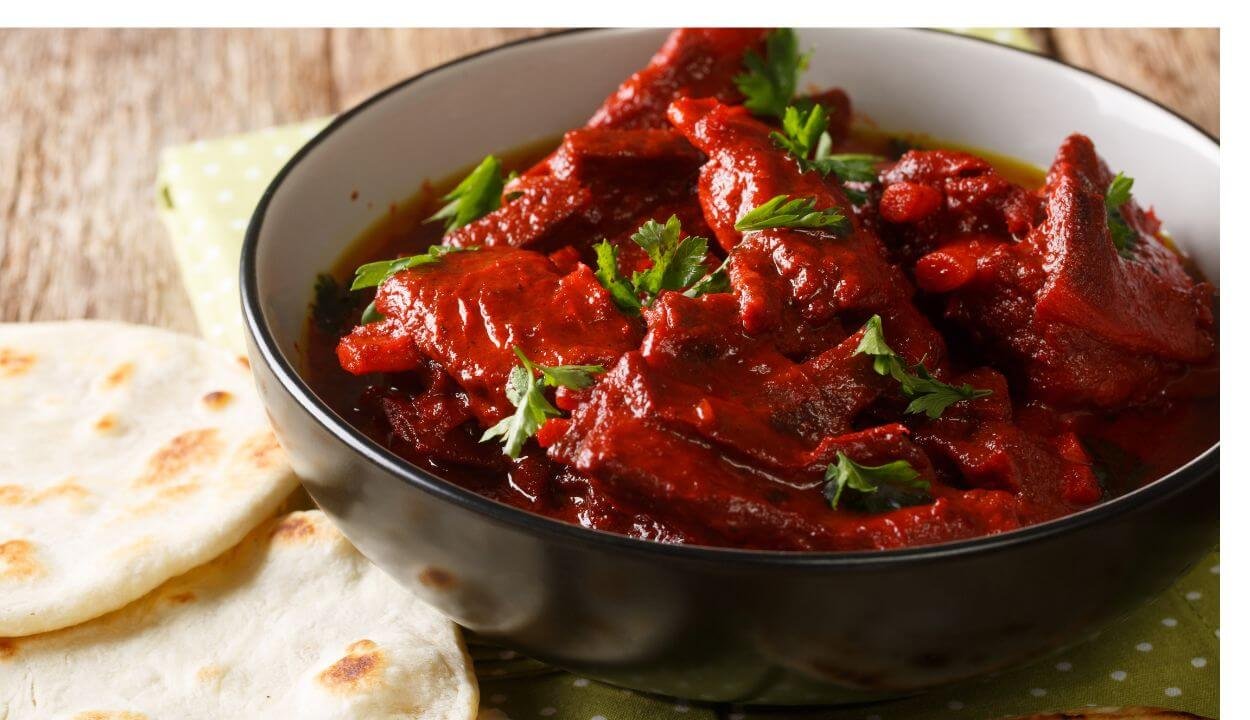
Mohan Maas is a refined meat preparation associated with Rajasthan's royal culinary traditions.
The dish is known for its delicate, rich gravy and aromatic spices rather than the intense chilli heat associated with Laal Maas.
Its royal association makes it particularly interesting for travellers who want to explore the more sophisticated side of traditional Rajasthani non-vegetarian cuisine.
Machalee Jaisamandi
Machalee Jaisamandi is associated with the Jaisamand region near Udaipur.
The preparation traditionally uses fish marinated with green chutney and spices before being cooked in a flavourful gravy containing ingredients such as garlic, ginger, coriander and mint.
It offers a different perspective on Rajasthan's cuisine because the state is often associated primarily with vegetarian food and meat curries.
Rajasthan Tourism includes Machalee Jaisamandi among its traditional dishes and associates it with the Jaisamand region of Udaipur.
Rajasthani Thali
For travellers who cannot decide what to order, a Rajasthani Thali can be the perfect introduction to the state's cuisine.
Rather than focusing on one dish, a traditional thali brings several preparations together in one meal.
Depending on the restaurant and region, a thali may include dal, baati, churma, gatte, vegetables, kadhi, rice, rotis, chutneys, pickles, sweets and other accompaniments.
The greatest advantage is variety. You can taste spicy, sweet, tangy, creamy and savoury dishes during the same meal.
A good Rajasthani Thali also demonstrates how different components are designed to complement one another rather than simply providing a large number of dishes.
Famous Food of Jaipur
Jaipur is one of the best cities in Rajasthan for exploring the state's culinary traditions.
The city is particularly known for Ghevar, Pyaz Kachori, Mawa Kachori and a wide range of traditional sweets and snacks.
Its old markets and food streets offer opportunities to try everything from quick street snacks to elaborate Rajasthani thalis.
Ghevar has a particularly strong connection with Jaipur, with the sweet traditionally associated with Teej and Raksha Bandhan.
If you are visiting Jaipur, do not limit your food experience to restaurants. Exploring traditional markets and local sweet shops can reveal a much wider variety of Rajasthani flavours.
Famous Food of Jodhpur
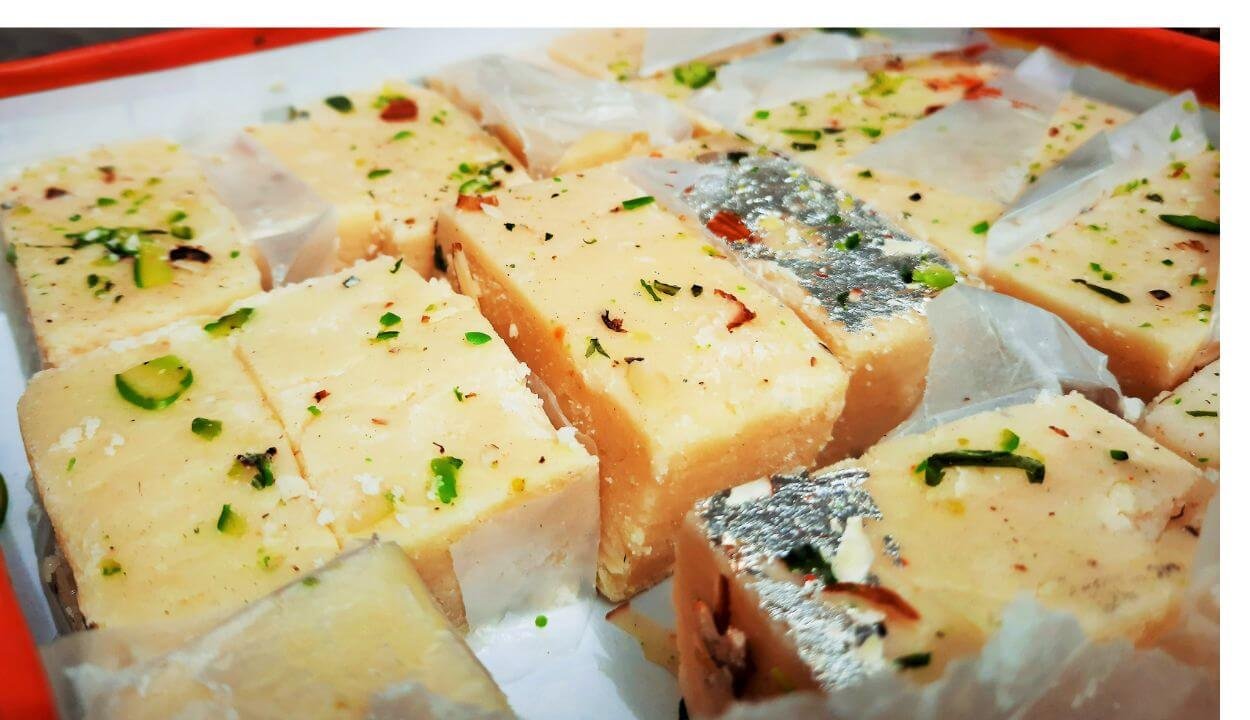
Jodhpur is one of Rajasthan's most exciting destinations for street food.
Mirchi Bada is perhaps the city's most recognisable snack. The combination of a crisp gram-flour coating, spicy green chilli and potato filling makes it particularly satisfying.
Jodhpur is also a great place to try Pyaz Kachori, traditional sweets, Makhaniya Lassi and a variety of local snacks.
The city's old markets around the Clock Tower provide an atmospheric setting for exploring local food alongside handicrafts, textiles and spices.
Famous Food of Udaipur
Udaipur's food scene reflects both traditional Mewari cuisine and the city's growing popularity among domestic and international travellers.
Visitors can find Dal Baati Churma, Gatte Ki Sabzi, Ker Sangri, traditional sweets and a variety of Rajasthani thalis.
Machalee Jaisamandi is particularly associated with the Udaipur region and provides an interesting option for travellers who want to try a regional fish preparation.
Dining near the old city and lakes also adds an atmospheric element to the experience, especially around sunset.
Famous Food of Jaisalmer
Jaisalmer's cuisine is strongly influenced by the desert environment.
Traditional dishes such as Ker Sangri, Bajra-based breads, Gatte preparations and spicy chutneys are particularly appropriate for understanding the region's culinary heritage.
The city's markets and local restaurants also offer snacks and sweets that make excellent additions to a day spent exploring Jaisalmer Fort and the old city.
A desert trip can be an especially enjoyable time to try traditional Rajasthani food, particularly when meals are served in a more rustic setting.
Famous Food of Bikaner
Bikaner is renowned throughout India for its snacks and sweets.
The city's name is strongly associated with Bikaneri Bhujia, a thin, crispy snack made from gram flour and spices.
Bikaner is also known for kachoris, sweets and a variety of traditional savoury snacks.
A visit to Bikaner's old markets can therefore become an important part of your culinary itinerary, particularly if you enjoy Indian namkeen and traditional sweets.
Famous Food of Pushkar
Pushkar has a distinctive food culture shaped by its spiritual identity and large number of vegetarian visitors.
The town is known for vegetarian food, local sweets, snacks and cafés serving both Indian and international dishes.
For travellers who enjoy exploring food on foot, the markets around Pushkar Lake provide plenty of opportunities to try local snacks while discovering the town's colourful streets.
Famous Rajasthani Sweets
Rajasthan's food culture is incomplete without sweets.
Ghevar is perhaps the most iconic, particularly during Teej and Raksha Bandhan.
Mawa Kachori offers a rich combination of pastry, mawa, nuts and sweetness.
Other traditional sweets and desserts found across the state include Malpua, Balushahi, Makhaniya-based desserts and a variety of milk-based preparations.
Sweet shops are often an important part of Rajasthan's local food culture, especially in historic markets.
For visitors, buying a box of traditional sweets can also be a delicious way to take a small part of Rajasthan home.
Traditional Drinks to Try in Rajasthan
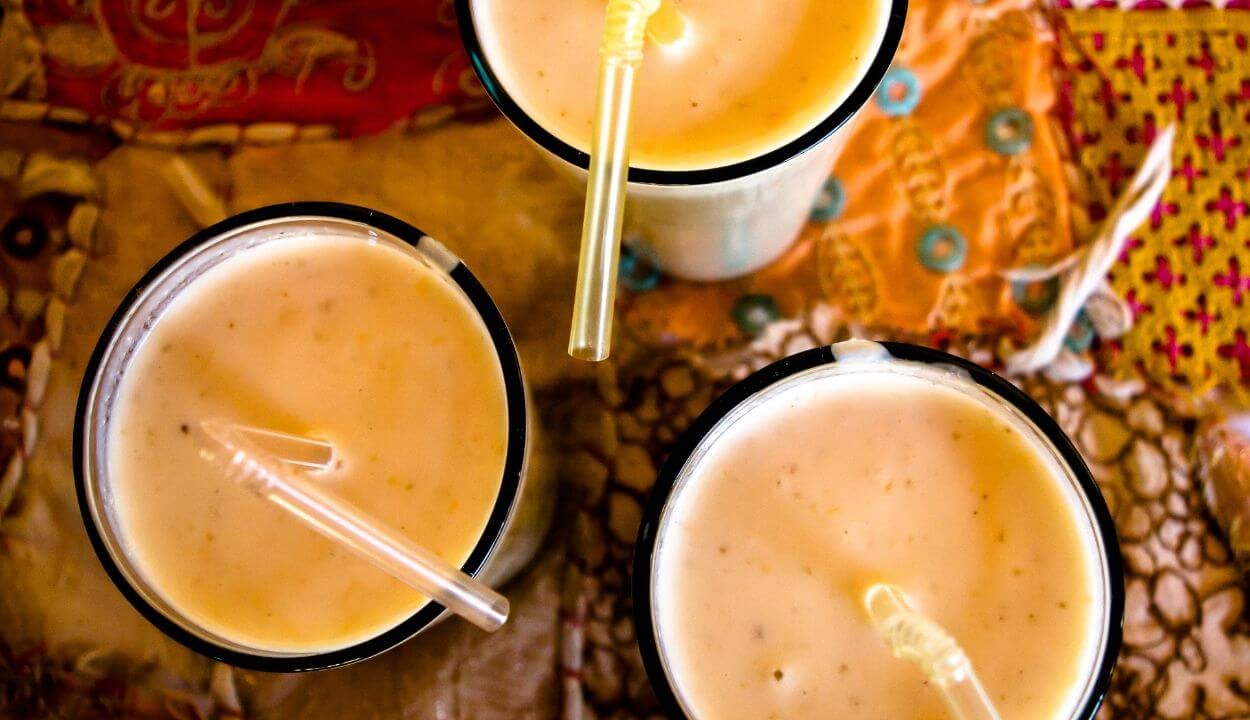
Rajasthan's food experience extends beyond meals and snacks.
Lassi is one of the most refreshing drinks to try, particularly during warmer months. Jodhpur is especially known for its thick and flavourful versions.
Chaas, or buttermilk, is another traditional accompaniment that pairs well with spicy food.
During festive and traditional occasions, travellers may also come across regional preparations based on milk, spices and other local ingredients.
In Rajasthan's hot climate, refreshing drinks are not simply a culinary indulgence; they can be an essential part of staying comfortable while exploring.
Why Rajasthan's Desert Cuisine Is So Unique
The desert environment has played a major role in shaping Rajasthan's food traditions.
Limited access to fresh vegetables in some regions encouraged cooks to rely on ingredients that could survive the climate or be stored for longer periods.
Dried berries, beans, millet, gram flour, lentils and spices became important ingredients.
This history helps explain why dishes like Ker Sangri remain so significant. Instead of treating the environment as a limitation, traditional cooks developed techniques that turned locally available ingredients into flavourful and satisfying meals.
The result is a cuisine that feels deeply connected to the land.
The Role of Spices in Rajasthani Cuisine
Spices are central to Rajasthani cooking, but their role extends beyond simply making food hot.
Cumin, coriander, turmeric, red chilli, cloves, cardamom, cinnamon, ajwain and other spices contribute aroma, warmth and complexity.
Garlic and red chilli are especially prominent in many traditional preparations.
The intensity can vary significantly from one dish and restaurant to another, so travellers who prefer mild food should feel comfortable asking about the spice level before ordering.
One of the pleasures of Rajasthani cuisine is discovering how the same basic ingredients can produce completely different flavours depending on the cooking technique.
Vegetarian Food in Rajasthan
.jpg)
Rajasthan is an excellent destination for vegetarians.
In fact, many of the state's most iconic dishes are vegetarian. Dal Baati Churma, Gatte Ki Sabzi, Ker Sangri, Panchmel Dal, Papad Ki Sabzi, Kadhi and Bajra Roti are just a few examples.
The cuisine demonstrates that vegetarian food does not have to be simple or repetitive.
Gram flour, lentils, spices, dairy products, dried vegetables and grains are transformed into dishes with remarkably different textures and flavours.
Travellers following a vegetarian diet will generally find plenty of traditional choices across Rajasthan's major tourist destinations.
Best Way to Experience Rajasthan's Food
The best way to discover Rajasthan's cuisine is not to order only the most famous dishes.
Try to experience different types of food throughout your journey.
Start with a traditional breakfast of kachori and tea. Have a Rajasthani Thali for lunch. Try Mirchi Bada during an evening walk through Jodhpur. Taste Ker Sangri and Gatte Ki Sabzi with Bajra Roti. Finish a meal with Ghevar or another local sweet.
This approach allows you to understand how varied Rajasthani food really is.
It is also worth eating at a mixture of traditional restaurants, local eateries, established sweet shops and carefully chosen street-food stalls. Each setting reveals a different side of the state's food culture.
When Is the Best Time to Enjoy Rajasthani Food?
Rajasthan's traditional cuisine can be enjoyed throughout the year, but some dishes have particularly strong seasonal associations.
Ghevar is particularly popular during monsoon and Teej season. Rajasthan Tourism notes its close association with the rainy season and Teej celebrations.
Winter is particularly pleasant for exploring outdoor food markets and street-food areas because the cooler temperatures make walking and eating outside more comfortable.
During festivals, local sweets and special preparations can become even more prominent, making festival travel an excellent opportunity for food lovers.
Tips for Trying Famous Food in Rajasthan
If you are trying Rajasthani food for the first time, start with smaller portions when possible. Some dishes can be considerably richer or spicier than you may expect.
Ask about the spice level before ordering Laal Maas, Mirchi Bada or particularly chilli-heavy chutneys.
Try traditional dishes with their usual accompaniments rather than eating each component separately. Garlic chutney, curd, ghee, pickles and sweets are often intended to balance the main dishes.
For street food, choose busy stalls where food is prepared frequently and served hot.
If you are travelling during summer, stay hydrated and balance spicy meals with refreshing drinks such as chaas or lassi.
Most importantly, do not judge a dish only by its appearance. Some of Rajasthan's most delicious preparations, including Ker Sangri and Gatte Ki Sabzi, may look unfamiliar at first but reveal remarkable depth of flavour once tasted.
Frequently Asked Questions About Famous Food of Rajasthan
What is Rajasthan's most famous food?
Dal Baati Churma is widely regarded as one of the most famous traditional foods of Rajasthan. Other iconic dishes include Laal Maas, Gatte Ki Sabzi, Ker Sangri, Pyaz Kachori, Mirchi Bada and Ghevar.
What food should I try in Rajasthan?
Start with Dal Baati Churma, then try Gatte Ki Sabzi, Ker Sangri, Pyaz Kachori, Mirchi Bada and Ghevar. If you eat meat, Laal Maas and Safed Maas are among the traditional dishes worth exploring.
What is Jaipur's famous food?
Jaipur is particularly famous for Ghevar, Pyaz Kachori and Mawa Kachori. The city also has numerous places serving traditional Rajasthani Thalis and other regional dishes.
What is Jodhpur's famous food?
Mirchi Bada is one of the most famous foods associated with Jodhpur. The city is also known for Pyaz Kachori, lassi, traditional sweets and a wide variety of street food.
What is Rajasthan's famous sweet?
Ghevar is one of Rajasthan's most famous sweets. It is particularly associated with Jaipur, Teej and Raksha Bandhan and is available in varieties such as plain, Mawa and Malai Ghevar.
Is Rajasthani food very spicy?
Some Rajasthani dishes can be quite spicy, particularly Laal Maas, Mirchi Bada and certain chutneys. However, the cuisine includes plenty of milder and creamy dishes, so travellers can choose according to their preference.
Is Rajasthan good for vegetarian food?
Yes. Rajasthan is an excellent destination for vegetarian travellers. Many of its most famous dishes, including Dal Baati Churma, Gatte Ki Sabzi, Ker Sangri and Panchmel Dal, are vegetarian.
What is Ker Sangri?
Ker Sangri is a traditional Rajasthani preparation made from ker berries and sangri beans associated with the Khejri tree. It is generally cooked with spices and served as a dry vegetable preparation. It is particularly important in Marwari cuisine.
What is Laal Maas?
Laal Maas is a traditional Rajasthani mutton curry known for its deep red colour and bold chilli-based flavour. It is associated with the royal culinary traditions of Rajasthan and is commonly served with roti or rice.
Which Rajasthani food is best for breakfast?
Pyaz Kachori is one of the most popular traditional breakfast and snack options. It is especially associated with Jaipur and Jodhpur and can be enjoyed with chutney and tea.
A Culinary Journey Through Rajasthan
Famous food in Rajasthan tells a story that goes far beyond recipes.
It tells the story of a desert environment where cooks learned to make remarkable meals from ingredients that could be stored and preserved. It reflects the influence of Rajput royal kitchens, the traditions of Marwari households and the diverse communities that have shaped the state's culture over generations.
It is there in the ghee-soaked Baati, the earthy Ker Sangri, the fiery Laal Maas, the comforting Gatte Ki Sabzi, the crisp Pyaz Kachori and the delicate sweetness of Ghevar.
Every city adds its own flavour to the experience. Jaipur invites you to explore traditional sweets and kachoris. Jodhpur brings the excitement of street food and Mirchi Bada. Udaipur introduces regional Mewari flavours alongside its lakes and palaces. Bikaner is a paradise for snacks and sweets, while Jaisalmer offers food traditions deeply connected with the desert.
The best part is that you do not need to be a serious food enthusiast to appreciate Rajasthani cuisine. Simply sit down for a traditional meal, tear open a hot Baati, add a spoonful of dal and ghee, taste the chutney and finish with something sweet.
By the end of the meal, you may discover that some of your favourite memories of Rajasthan are not the ones you photographed, but the flavours you tasted along the way.
Explore Rajasthan With Comfort & Luxury
Book customized Rajasthan tours with taxi, hotel stay, sightseeing and local travel support.
Enquiry Now Call Us NowBlog Categories
Explore blogs by category
.jpg)
Top Tourist Attractions in Rajasthan 25 Must Visit Places for an Unforgettable Trip
.jpg)
Festivals in Rajasthan

Explore the Best Bazaars for Shopping Handicrafts and Local Treasures
.jpg)
Uttarakhand Tourism Guide 2026: Explore Char Dham, Hill Stations, Wildlife & Himalayan Adventures

Kashmir Tourism Guide 2026: Explore Srinagar, Gulmarg, Pahalgam, Sonamarg & Paradise on Earth
Need Instant Help?
Chat directly with our travel expert and get quick pricing & tour details.
WhatsApp Now